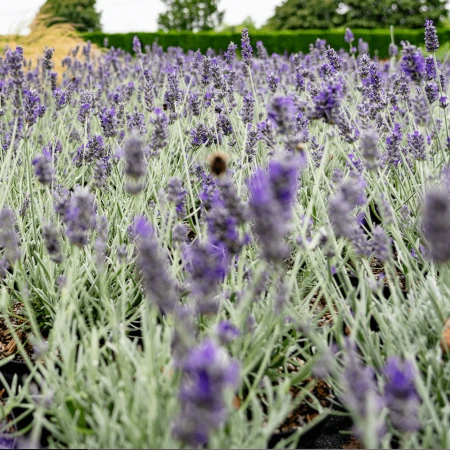
Lavender ‘Richard Gray’ (Lavandula chaytoriare ‘Richard Gray’) is a fragrant, evergreen shrub up to 50cm in height and width with reasonably wide, silver-grey leaves up to 5.5cm long with violet flowers on spikes in late summer. To prolong the flowering period with a second flush, dead head the flowers before they turn.
Free click & collect from the nursery, or delivery on larger orders.
Lavender ‘Richard Gray’ (Lavandula chaytoriare ‘Richard Gray’) is a fragrant, evergreen shrub up to 50cm in height and width with reasonably wide, silver-grey leaves up to 5.5cm long with violet flowers on spikes in late summer. To prolong the flowering period with a second flush, dead head the flowers before they turn.
Lavender ‘Richard Gray’ (Lavandula chaytoriare ‘Richard Gray’) is a chaytoriare variety. This is a cross between a Lanandula lanata (Wooly lavender, native to southern Spain) and a Lavender angustifolia (English lavender/narrow leafed Lavender, native to the Mediterranean and the mountains in Northern Spain). It has a RHS hardiness rating of H4 meaning it can tolerate temperatures down to -10 to -5C. Lavender should be positioned in full sun in soil with good drainage and plenty of shelter.
Lavender is widely misunderstood in many ways. Many people think it hates water. From experience, I know this not to be true, lavender simply likes to be in well drained soil so it does not sit in the water for long periods of time. Though once established it is very tolerant of droughts. Given the species that are crossed to make it originate from, this is hardly surprising. However, despite its non native origins it has huge environmental benefits. Being high in pollen and nectar content, it attracts bees, moths, butterflies, birds and other pollinators. This makes them perfect for cottage, informal, low maintenance, city and courtyard gardens.
Lavender ‘Richard Gray’ (Lavandula chaytoriare ‘Richard Gray’) makes for the perfect dwarf hedge, capable of flanking a path or dividing a garden in to sectors. Due to its love of sharp drainage, it is perfect for being put on steep banks and suits Mediterranean garden well.
Lavender ‘Richard Gray’ (Lavandula chaytoriare ‘Richard Gray’) is in RHS Pruning group 10. This means it should be pruned in early to mid spring.
Lavender ‘Richard Gray’ (Lavandula chaytoriare ‘Richard Gray’) is not poisonous to livestock. Horses are generally fine to eat it and it can have a calming effect on them.
Growth rate
Max dimensions
Light levels
Growing conditions
Pruning
Hardiness
Livestock and horses
It is not generally poisonous to livestock and can have a calming effect on horses
Buying Lavender
Here at HedgeXpress we care about our environment. Help us great a more sustainable world by buying our peat free Lavenders turning your garden in to the perfect place for birds, bees and other pollinators, making your garden bustle with wildlife.
Other shrubs and lavender we stock
Rosemary ‘Miss Jessop’s’ goes very well with Lavender, creating a Mediterranean feel to the garden.
We also stock Lavandula chaytoriare ‘Sawyers’, another type of chaytoriare.
Every plant we sell is backed by four decades of growing. Tell us about your garden and we’ll tell you honestly whether this is the right plant for it.
Get in touch HedgeXpress